The complete guide to schema markup for SEO & AEO
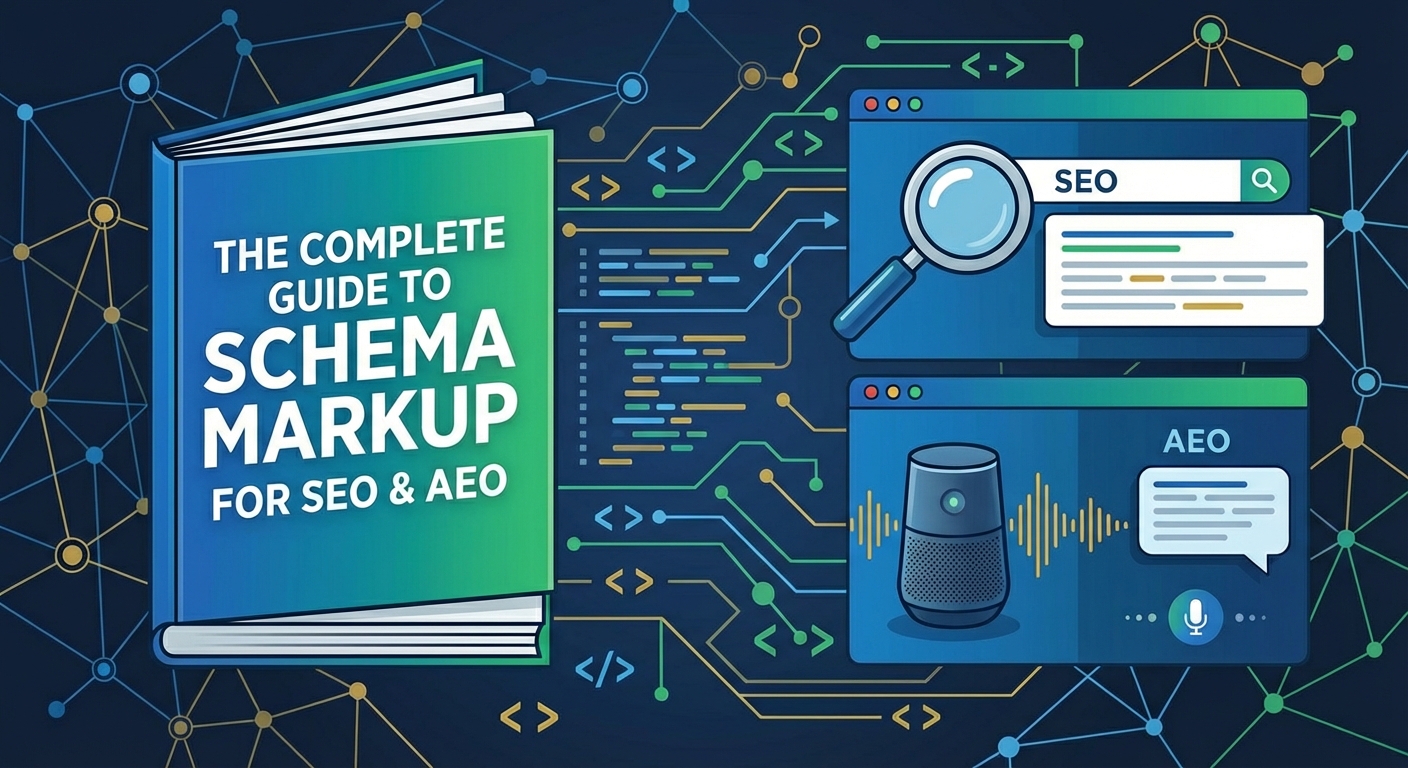
Schema markup is the bridge between your content and AI understanding. While most website owners have heard of schema, few realize its critical importance for both traditional search engines and the emerging world of AI-powered search platforms.
In an era where ChatGPT, Perplexity, and Google AI Overviews are reshaping how people find information, schema markup isn't just about rich snippets anymore—it's about ensuring AI platforms can understand, cite, and reference your content accurately.
What is schema markup
Schema markup is structured data that helps search engines and AI platforms understand the content on your website. Think of it as providing context and labels for your content, similar to how you might organize files in folders with descriptive names.
Technical Definition
Schema markup uses vocabulary from Schema.org to create structured data that machines can easily parse and understand. It's typically implemented using JSON-LD format, which is Google's recommended approach.
Practical Impact
When you add schema markup to a product page, you're not just telling search engines "this is a product"—you're providing specific details about price, availability, reviews, and specifications that both search engines and AI platforms can use to understand and reference your content.
The AI Connection
While schema was initially designed for search engines, AI platforms use it extensively to understand content context. When ChatGPT cites your product information or Perplexity references your article, they often rely on schema markup to ensure accuracy.
Why it matters for AI search
The rise of AI-powered search platforms has dramatically increased the importance of schema markup. Here's why:
AI Citation Accuracy
When AI platforms generate answers that cite your content, schema markup helps ensure they reference your information accurately. Without proper markup, AI might misinterpret product prices, article publication dates, or business information.
Enhanced Visibility
AI platforms prioritize well-structured content when selecting sources for citations. Proper schema markup increases your chances of being referenced in AI-generated responses.
Rich Results in Traditional Search
Google uses schema markup to create rich snippets, knowledge panels, and other enhanced search results that occupy more screen space and attract more clicks.
Voice Search Optimization
As voice assistants become more sophisticated, they rely heavily on structured data to provide accurate spoken responses to user queries.
Expert Insight
"Schema markup is critical for both Google rich results and AI citations. It's the language that helps search engines and AI platforms understand your content."
— Kristian Johansen, SEO Expert at OmniGanic
Automated Schema Implementation
Our network layer automatically adds comprehensive schema markup to every page. See how we'd optimize your structured data without touching your code.
Key schema types for business success
While there are hundreds of schema types available, these are the most impactful for business websites:
Organization Schema
Provides essential business information including name, logo, contact details, and social media profiles. This is fundamental for establishing your business entity across search platforms.
Article Schema
Critical for blog posts, news articles, and any editorial content. Includes publication date, author information, and article structure that AI platforms use for content citations.
Product Schema
Essential for e-commerce sites. Includes price, availability, reviews, specifications, and product variants. This directly impacts both shopping results and AI product recommendations.
FAQ Schema
Structures question-and-answer content in a way that's perfect for voice search and AI responses. This schema type is increasingly important for capturing featured snippets and AI citations.
LocalBusiness Schema
For businesses with physical locations. Includes address, phone number, hours of operation, and service areas. Critical for local search visibility and location-based AI responses.
Review Schema
Structures customer reviews and ratings in a way that search engines and AI platforms can understand and display. Impacts both rich snippets and AI recommendations.
Breadcrumb Schema
Helps search engines understand your site structure and navigation hierarchy. Important for both user experience and search engine crawling efficiency.
Implementation best practices
Effective schema implementation requires attention to detail and adherence to best practices:
Use JSON-LD Format
Google recommends JSON-LD over other formats because it's easier to implement and maintain. It can be added to your page head without affecting the visible content structure.
Match Content Exactly
Your schema markup should accurately reflect the content on your page. Mismatches between markup and visible content can result in penalties or reduced trust from search engines.
Include Required and Recommended Properties
Each schema type has required properties (minimum for validation) and recommended properties (for optimal performance). Include as many recommended properties as possible.
Validate Your Markup
Use Google's Rich Results Test and Schema Markup Validator to ensure your implementation is correct and will function as intended.
Keep Information Current
Outdated schema markup can harm your credibility with both search engines and AI platforms. Ensure product prices, availability, and business information remain accurate.
Implement Hierarchically
Start with organization-level schema, then add page-specific markup. This creates a comprehensive structured data foundation that search engines can understand.
Monitor Performance
Track how your schema markup affects search appearance and AI citations. Use Google Search Console to monitor rich result performance and adjust your implementation accordingly.
The businesses that prioritize comprehensive schema implementation now will have a significant advantage as AI search platforms continue to grow. Schema markup isn't just about immediate SEO benefits—it's about future-proofing your content for an AI-driven search landscape.
While manual schema implementation can be complex and time-intensive, automated solutions can ensure consistent, comprehensive markup across your entire website without requiring technical expertise.
The key is to view schema markup not as a one-time technical task, but as an ongoing foundation for how machines understand and reference your content across all search platforms.
Frequently asked questions
Do I need schema markup on every page?
While not every page requires schema markup, most pages benefit from at least basic Organization or WebPage schema. Product pages, articles, and business information pages should definitely include relevant schema types.
How long does it take to see results from schema markup?
Search engines typically process schema markup within a few weeks, but rich results may take longer to appear. AI platform benefits can be seen more quickly as they crawl and index structured data frequently.
Can incorrect schema markup hurt my SEO?
Yes, misleading or incorrect schema markup can result in search engine penalties or loss of rich result eligibility. It's crucial to ensure your markup accurately reflects your page content.
Is schema markup important for local businesses?
Extremely important. LocalBusiness schema helps search engines and AI platforms understand your location, hours, services, and contact information, which is crucial for local search visibility and voice search results.
Ready to Implement Schema at Scale?
Stop manually adding schema markup. Our network layer automatically implements comprehensive structured data across your entire website.
No code changes • Live in 48 hours • 200+ schema types supported
Related Articles
AEO vs SEO: What's the Difference?
Understand how schema markup impacts both traditional SEO and Answer Engine Optimization for AI platforms.
What is AI Visibility Optimization?
Learn how structured data helps AI platforms understand and cite your content.